
The Lone Wolf That Killed 500 Animals in South Dakota
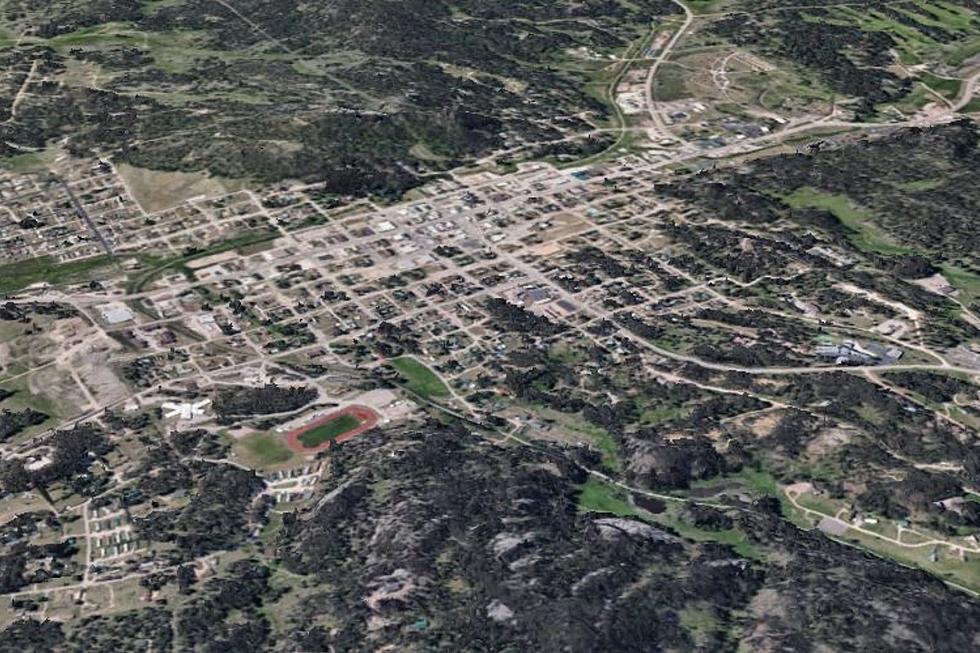
At the dawn of the 20th Century, the area around Custer, South Dakota, was terrorized by a ferocious wolf.
Have you seen the movie The Ghost and the Darkness? It's a 1996 film starring Val Kilmer and Michael Douglas. It's based on the true story of a pair of lions in Kenya that would menace the people building a railroad in 1898. The lions would attack workers, drag them out of their tents at night, scratch and chew them up, then leave their bodies. The animals weren't doing it for food; they seemed to be targeting and murdering the railroad workers. Val and Mike track and kill the lions, and the railroad work continued.

The Wolf That Haunted Western South Dakota
Between 1911 and 1920, something similar happened in western South Dakota. For those nine years, a lone grey wolf caused extensive damage to livestock by killing horses, cattle, and calves. In the end, the wolf is credited with killing nearly 500 cattle and horses.
He became known as the Custer Wolf. His reign of terror on the ranches in the area was so severe that locals wondered whether it wasn't just a wolf. It had to be a wolf-mountain lion hybrid or some other monster stalking the plains of southwestern South Dakota.
READ MORE: A Look at 20 Years of UFO Sightings in Sioux Falls

Hundreds of Livestock Lost to a Single Predator
The wolf was notorious for killing more than it could ever eat. In one particularly bloody week, it was reported to have killed more than 30 head of cattle, mutilating and leaving their bodies to rot.
Luckily, the wolf never attacked any people, as far as is known. But, not only was he a violent terror, he was very good at not getting caught. Hunts would be organized, but always came back empty-handed. Professional trackers tried for weeks to find the Custer Wolf. The federal government even posted a $500 bounty for the wolf. That's the equivalent of nearly $10,000 today. Hunters would go out, kill a bunch of wolves and coyotes, but the wolf attacks continued.
The Federal Hunt for the Custer Wolf
By the time 1920 rolled around, ranchers in the area were becoming resigned to the fact that the only way to end the wolf's attacks would be to wait him out, let him die of natural causes, and just suffer the losses.
Then, in April of 1920, the United States Department of Agriculture sent federal hunter H.P. Williams to Custer. He was tasked with bringing in the Custer Wolf and to not return until the animal was dead.
Williams found the wolf, tracked it, trying to find the right time and place to end its carnage. He quickly realized that the Custer Wolf was not working alone. A pair of coyotes had begun following the wolf around and feasting on the kills. In return for the easy meals, the coyotes would travel ahead of the wolf and warn him of dangers.
Realizing that this was happening, Williams took out the coyotes, erasing the wolf's advantage. It did spook the wolf, but it kept up the cattle massacre.
Legend, Myth, and the Wolf’s Final Days
Williams tracked the wolf through the summer of 1920, never able to get a clear shot of the animal. A trap he set nearly caught the wolf, but it escaped with an injured paw. By the middle of October, the Custer Wolf's luck ran out. He stepped on a trap laid by Williams. Severely injured and bleeding, the animal was easy to follow. Williams tracked it down and shot it.
When the wolf was brought in, it was discovered that it was just a regular grey wolf. Not a huge monster, the Custer Wolf was 98 pounds and six feet long. Many believed that the wolf's rampage was sparked by the killing of its mate and pups in a previous wolf hunt. Legend says that the wolf never took another mate and abandoned pack life to visit vengeance on humans.
From Blockbusters to Hidden Gems: 35 Movies That Take Place in South Dakota
Gallery Credit: Jeff Harkness/B1027.com
More From Hot 104.7 - KKLS-FM